Meditation vs. Mindfulness

AdobeStock_246959209 (1).jpeg

We hear about mindfulness and meditation all the time; but, what is the difference? Are they the same? Let me break it down for you.


Mindfulness is the awareness of something, while meditation is the awareness of nothing. There are many forms of meditation

Mindfulness Meditation is a form of Clear Mind meditation that helps to do just as the name implies - clear your mind. Attention is paid to the natural rhythm of the breath while sitting, and to the rhythm of slow walking.

Mindfulness meditation is a mental training practice that teaches you to slow down racing thoughts, let go of negativity, and calm both your mind and body. Mindfulness techniques can vary, but in general, mindfulness meditation involves a breathing practice and awareness of body and mind.

You can be mindful and not meditate. This is the practice of sitting with your thoughts, asking yourself intentional questions about a situation to deepen your self-awareness, which will help you navigate difficult and triggering situations.


Mindfulness requires ::

  • Beginner’s mind :: Seeing things as a visitor in a foreign land, everything is new and curious.

  • No judgment :: Becoming impartial, without any labels of right or wrong or good or bad. Simply allowing things to be.

  • Acknowledgement :: Recognizing things as they are.

  • Being settled :: Being comfortable in the moment and content where you are.

  • Being composed :: Being equanimous and in control with compassion and insight.

  • Letting be :: Letting things be as they are with no need to change them.

  • Being self reliant :: Deciding on your own, from your own experiences, what is true or not.

  • Being self-compassionate :: Loving yourself as you are with no criticism or self-reproach.

Types of meditation ::

  • mindfulness meditation

  • spiritual meditation.

  • focused meditation.

  • movement meditation.

  • mantra meditation.

  • transcendental meditation

  • progressive relaxation.

  • loving-kindness meditation


How can these things help with stress?

  • Proactively manage stress

  • Reduce anxiety that comes from racing thoughts and projecting the future

  • Increase your self-awareness, which can improve relationships, help identify triggers and create strategies to support stress reduction and improved mental health

How + when to use them to help with stress.

Bio-individuality | Each person is different, but these are general practice rules

  • Begin your day | Center yourself and plan for your day | Help you anticipate stress of day

  • In the moment | Center yourself + stop racing thoughts and anxiety

  • Stop and ask questions to get to root cause + triggers

Shots Anyone?

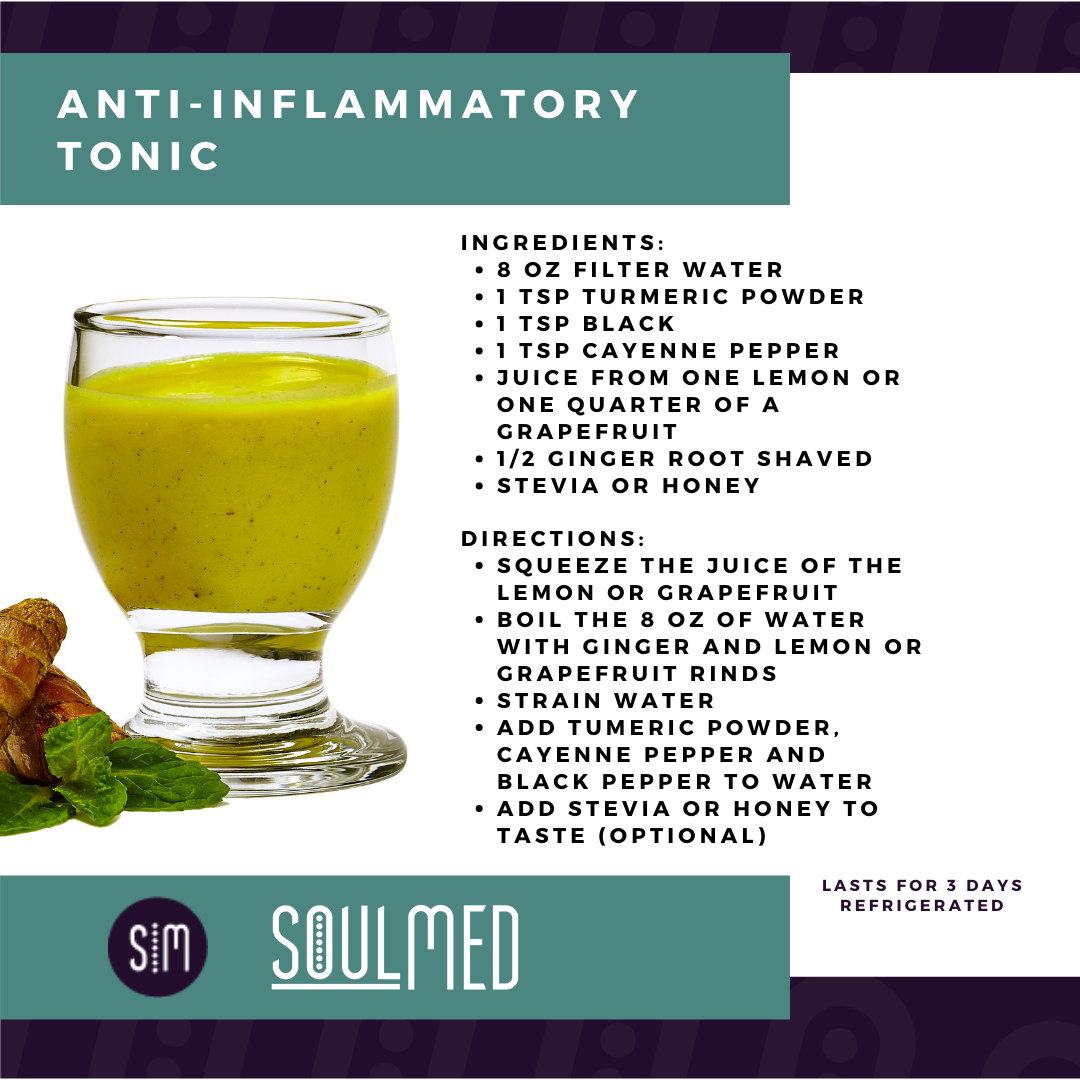
Getting the requisite vitamins and nutrients is extremely important to total health and wellness. Wellness shots and tonics are one way to secure these. Like juices, health-boosting power shots deliver a quick dose vitamins, minerals and anti-oxidants in a concentrated dose. Check out the two recipes to help reduce increase weight loss and reduce inflammation below.

Also see ::

1.png
2.png

Girl, Affirm Yourself!

Affirmations

Words have power. When you speak positive words and affirm yourself you will experience happy times.

Positive affirmations can change your mood - immediately. They can also help you manifest the life you want. Create a list of positive affirmations and use them to help you navigate stressful moments. For example, if you are stressed about your finances you can say ::

  • I have all the resources to meet my needs.

  • I lack nothing.

  • I am resourceful and powerful. I will attract what I need to sustain and survive.

  • I’m a paper chaser. I got the block on fire. I will remain a G until the moment I expire. I know how to make something out of nothing. I handle my business. (Inspired by Ha by Juvenile) ***

  • I will win. It’s my winning season. (Inspired by You Will Win by Jakaylan Carr) ***

  • I’m a master lemonade maker. No matter what life hands me I made the best lemonade ever! Grab a glass! (Inspired by Lemonade by Beyoncè) ***

  • I won’t let Satan win aka Not today Satan. (Inspired by black mommas everywhere) ***

*** TAKEN FROM I AM ENOUGH :: 50 AFFIRMATIONS FOR BLACK WOMEN. ORDER HERE.

Sis, Get Your Money Right

The 50/30/30 rule

According to the SoulMed Holistic Health survey, stress is the number one concern of Black women around the country.

One common cause of stress if money.

No matter your income, it’s important that you know how to manage what you have.

You can start to get your finances in order by implementing the 50/30/20 rule. The basic rule is to divide up after-tax income and allocate it to spend ::

  • 50 percent needs

  • 30 percent enjoyment 

  • 20 percent savings

Get to the bag, sis!

Sometimes what you have just isn’t enough to move you forward. When that’s the case, you have to know how to get to that bag!

According to Nadia C. Vanderhall of Brands + Bands, getting to that bag is as simple as taking an inventory of your skills and using them to build a business or shift your career. To get started ask yourself the following questions ::

  • What do I do well?

  • What are business opportunities and/or careers that align with my gifts? If you don’t know or need ideas, try Google and God. Search Google for ideas and ask God for direction. Then wait on His response.

  • How can I prepare for my come up? Strengthen your knowledge by taking classes that align with your gifts. There are several free skills-based certification classes available now. Again, Google can be your best friend when finding those opportunities.

Vanderhall also shared tips for getting to the bag through investing and managing your money. One of my favorite tips from this part of the conversation was - consume what you consume. If you want to know what it means, you will have to read her blog post Bill or Buy :: Consume What You Consume.

Get more tips by watching the replay of SoulMed presents Soul Sessions :: The Financial Edition below.

Don’t miss out on the good, good. Make sure you are at Soul Sessions each week.


RECIPE :: Detox Salad

Detox Salad.png


Serves: 2 | Prep: 10 mins | Cook: 0 mins 

Nutrition per  serving: 

  • 315 kcal  

  • 24g Fats  

  • 19g Carbs  10g Protein 

Ingredients

  • 2 bunches parsley,  roughly chopped, around 1  oz. (30g) 

  • ¼ cup (46g) cooked  quinoa 

  • 1 avocado, peeled, stone  removed, cut into cubes • ½ cucumber, cut into  cubes 

  • ½ zucchini, cut into cubes • 1 small red onion, finely  diced 

  • 1 tsp. olive oil 

  • juice of 1 lemon 

  • ¼ cup (30g) mixed seeds  and nuts, to garnish 

Directions

  1. In a medium bowl add parsley, avocado, quinoa,  cucumber, zucchini, and onion and toss to combine. 

  2. Drizzle with olive oil and lemon, season with salt and  pepper, then mix to combine and serve sprinkled with  nuts and seeds. 

RECIPE :: Fluffy Berry Pancakes

Makes: 8 | Prep: 10 mins | Cook: 10 mins

Nutrition per  serving: 

  • 170 kcal  

  • 7g Fats 

  • 22g Carbs  

  • 6g Protein

Ingredients

  • 1 cup (200g) cottage  cheese 

  • 2 eggs 

  • 2 tbsp. coconut sugar  • 2 tbsp. coconut oil,  melted 

  • 1/3 cup (80ml) coconut  milk, carton 

  • 1 1/3 cup (160g) wheat  flour 

  • 2 tsp. baking powder

  • Approximately 24 raspberries

  • Approximately 32 blueberries 

Directions

  1. Place the cottage cheese in a bowl and crush it with a  fork. Add the eggs, sugar and whisk well, then pour in  the oil and milk and mix again. 

  2. Mix in the flour and baking powder until smooth mass  forms.  

  3. Heat a dry non-stick pan on medium heat, and place 2  tablespoons of the dough per one pancake onto the  pan. Level the surface and arrange a few berries over  the top. Fry for about 2.5 minutes over medium heat  until grown slightly and browned. 

  4. Flip over and cook for another 2-2.5 minutes until  browned on the other side. Serve hot or cold. 

Causes of Stress

AdobeStock_188154845 (1).jpeg

CAUSES OF STRESS

It is important that we understand the causes of stress and that ultimately we control how stress impacts our lives. We must be able to diagnose when we are stressed and what is causing the stress. The categories below can help you determine what is causing your stress.

  • Time stress :: This type of stress revolves around concerns about time – most frequently the lack of time to accomplish all that needs to be done in a given timeframe. 

  • Anticipatory stress :: Anticipatory stress is usually felt in conjunction with concerns about the future, anticipatory stress appears in both specific and vague manifestations.

  • Situational stress :: While the two preceding forms of stress may be prolonged over a long stretch of time, situational stress tends to be sudden and overwhelming. The common thread amongst all forms of this type of stress is feeling a lack of control. 

  • Encounter stress :: Encounter stress are moments of stress are likely to come out when being required to interact with a certain person or group of people

When you feel stressed or anxious, ask yourself the following questions to determine which cause of stress ::

  • What is it about the situation I am in that is causing me stress?

  • Why is this particular situation causing me stress?

  • Is there a specific reason or person that I am stressed in this situation?

  • How would I like to feel in this situation?

  • Would this situation be more enjoyable at a different time or in a different space?

After answering these questions, you should be able to better diagnose what specifically is causing your stress. From there, you have to have the courage and make a commitment to take control of the situation and do what is best for you. Building these three psychological traits - commitment, control and challenge will allow you to turn the unfortunate circumstance into opportunity for growth and help decrease the physical illness. This is called hardiness.

How do you build these traits? You learn more to refocus your attention on what you can control about the situation and use the stress tool(s) that work for you to bring your stress level down and create a plan of action.

Types of Stress

TYPES OF STRESS

Two of the major forms of stress are acute and chronic stress.

  • Acute stress, the most common form of stress, is short-term and stems from the demands and pressures of the recent past and anticipated demands and pressures of the near future (APA, 2011).

  • Chronic stress, a long term form of stress, derives from unending feelings of despair/hopelessness, as a result of factors such as poverty, family dysfunction, feelings of helplessness and/or traumatic early childhood experience (APA, 2011). Chronic stressors associated with health disparities include perceived discrimination, neighborhood stress, daily stress, family stress, acculturative stress, environmental stress and maternal stress (Djuric et al, 2010; NIH, 2011).