


author's note (2026)
i originally wrote this essay in august 2014.
reading it more than a decade later, i see both how much my thinking has evolved and how many of the questions have remained the same. there are arguments i would make differently today. there are places where i moved too quickly from observation to conclusion. there are complexities i would now explore with greater historical context and nuance.
i’ve chosen not to rewrite those parts.
instead, i’m republishing this essay as a record of where my thinking began.
what continues to resonate with me is the central question beneath the title: what happens when we celebrate the visible expressions of black culture while neglecting the communal practices that have historically sustained black communities?
that question has shaped much of my work over the last decade … from community organizing and civic engagement to wellness, food systems and collective care.
during Black Philanthropy Month, I’ll be exploring that question more deeply through a series of reflections on black philanthropy, mutual aid, and what it means to rebuild a culture of shared responsibility.
i invite you to read this piece in that spirit … not as my final word, but as the beginning of a conversation that i’m still having with myself.
Start of original article
i have two goals for this post:
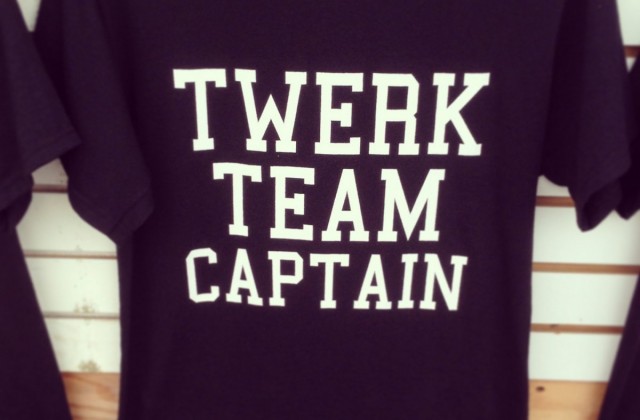
to show my support for the culture of twerking.
to show the connection between twerking, philanthropy and black american culture—it isn’t really an obvious or direct connection, so pay close attention.
first, the culture of twerking.
i have not always been a fan of music that, when played, makes your body instinctively begin to shake, gyrate and move as if you have no bones, ligaments or other structures. in fact, i would leave the dance floor exclaiming, “this music is so ghetto.”
that was circa early to late ’90s—and possibly into the 2000s.
i was speaking then of miami bass music, which was becoming extremely popular among youth my age. the society that i modeled my behavior after looked down on this type of music. it actually looked down on hip hop; so, after a while, i decided that hip hop too was ghetto.
i didn’t listen to it.
i didn’t like it.
i wasn’t going to be a part of THAT music.
then jay-z released kingdom come, and i fell in love with hip hop.
this time, i took it all in. i began to not only love the old-school, pre-1994 hip hop, but the new stuff too.
i still do today.
as i grew in listening to the music, i started to hear things that others didn’t. i heard cries for help. i heard social injustices. i heard people suffering. i heard a freedom of expression, which are all the foundations of hip hop.
ALSO SEE: hip hop: there's a message in the music
i not only heard things.
i also saw things.
one of the main things i saw in response to much of this music—from a dance perspective—was this thing called twerking.
much like my response to hip hop before, i was like, “ummm, this is … maybe not good.”
for some reason, i couldn’t completely turn myself into a twerk critic like the rest of the world. thank God for the gift of no judgement.
after a while, i just had to admit i was fascinated with twerking.
i mean, how can you hate someone who can move their body like that?
when we watch ballet, jazz, tap and hip hop dance, we are awed, amazed and clapping.
what is the difference between that and twerking?
ain’t it too dance?
hear me say this in my sojourner truth “ain’t i a woman?” voice.
fast forward to the airing of big freedia: queen of bounce and the episode where he connects it all for me—as it relates to why i, and most blacks, should value twerking.
the gist of the conversation is this: twerking is part of west african culture.
stop.
as black americans, we love to have this connection with africa.
we have started calling ourselves african americans.
we are wearing our hair in its natural state.
we love to wear african-inspired fashion.
but those things are safe, i suppose.
they are safe because they fit—somewhat—neatly into the culture box we have been given by mainstream society.
this is the box that says these are the parts of your culture you can enjoy and still receive approval from us.
this is where the connection between twerking, philanthropy and black american culture comes together for me—though not as neatly as the things in that culture box.
on tuesday, august 5, i had the pleasure of spending an hour or so with dr. emmett carson, founding ceo of the silicon valley community foundation.
it wasn’t a one-on-one meeting, but i do feel like i was the only one in the room as dr. carson shared his thoughts on “what’s community got to do with it?”
the answer?
everything.
dr. carson passionately laid out the evidence that helped him develop his truth—and later, i came to find it was mine as well—as it relates to today’s state of the black community and the role of community and philanthropy.
dr. carson says philanthropy built our community.
blacks self-funded education, civil rights and human rights organizations in the past. their collective pooling of money also helped blacks realize economic self-sufficiency.
we—blacks—made things happen for our people.
we leveraged the communal culture of our african ancestors and took care of our community because, as dr. carson so eloquently stated:
“we weren’t going to the ford foundation for no grants.”
and then we integrated.
he suggests that integration gave us an opportunity to shed the burden of blackness, and we did.
the result: an academic achievement gap, increased crime in our communities, an economically depressed black community where more people are losing homes and struggling to survive than in past decades, and the death of hbcus.
not to mention the suffering of people of color across the country and the destruction of the black family—in total and separately.
all these things exist while we have the most buying power in history, the most millionaires in our communities and the highest number of athletes and entertainers with foundations that are supposed to help the community.
serious side eye on that last one.
ALSO SEE: 21st century black American culture: drunk and dependent
so, what do twerking and philanthropy have to do with black american culture?
they are both rooted in our african ancestry and are a part of american culture by the mere fact that we have that culture but were born american.
the way that we do both is unique to us and can be said to be a part of black american culture.
the dominant culture in america has tried—pretty successfully, i might add—to tear both from us.
in the case of twerking, we are told it is salacious, nasty, ghetto and unappealing.
who wants to be associated with any of those things?
our history of helping our people help themselves was turned into “help everyone because we are all equal.”
that means our black money shouldn’t just be invested in our black people.
we should share it.
we’ve bought it all—hook, line and sinker.
and look where we are now.
time for a change.
time to embrace our culture and take back our communities.
epilogue
when i wrote this essay in 2014, i thought i was writing about twerking.
i wasn't.
i was writing about culture.
more specifically, i was wrestling with a question that continues to shape my work today:
what does it mean to practice community?
over the past decade, that question has led me into conversations about wellness, food systems, civic engagement, social infrastructure and black philanthropy. i've come to believe that culture is more than what we wear, dance, consume or celebrate. culture is also how we care for one another, share resources, build institutions and practice collective responsibility.
that's the conversation i hope to continue during black philanthropy month.
because perhaps the most enduring traditions we inherited were never simply artistic expressions.
perhaps they were ways of belonging to one another.